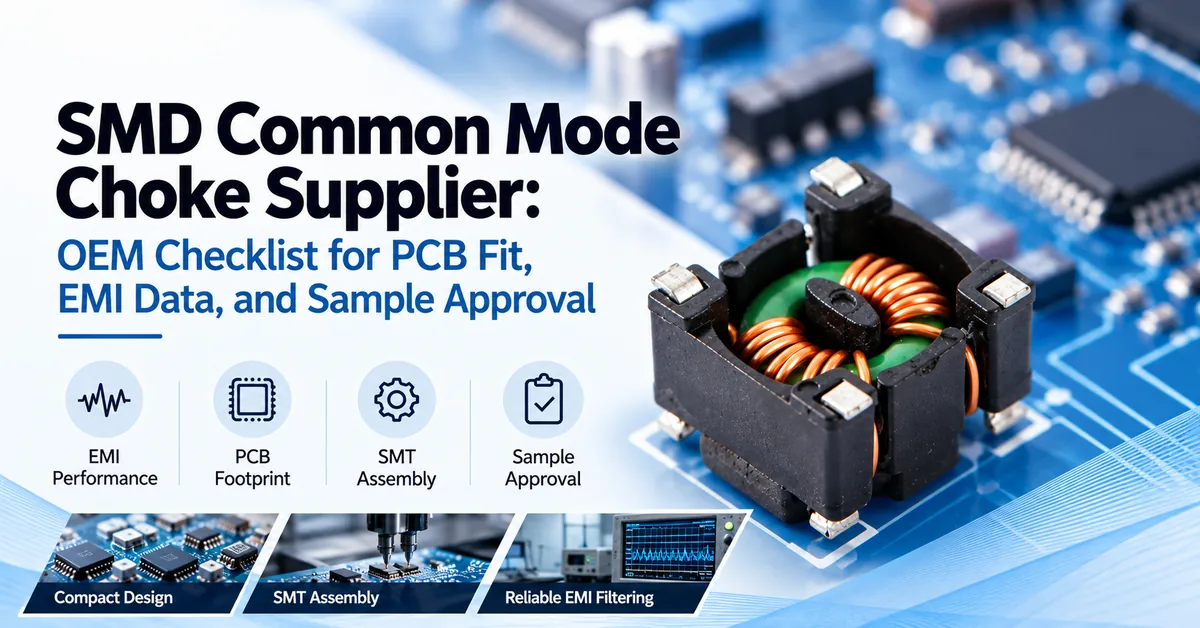
Finding a reliable common mode choke supplier is especially important when an OEM manufacturer needs to qualify an alternative source, secure repeat orders, or reduce dependence on a single component supplier.
The critical purchasing question is not simply whether two chokes have the same inductance or physical appearance. It is whether the proposed alternative meets the electrical, mechanical, environmental, and production requirements already approved for the end product.
For successful second sourcing, OEM teams should compare impedance-frequency behavior, rated current, DC resistance, mounting geometry, insulation requirements, manufacturing consistency, and supply documentation before approving a replacement.
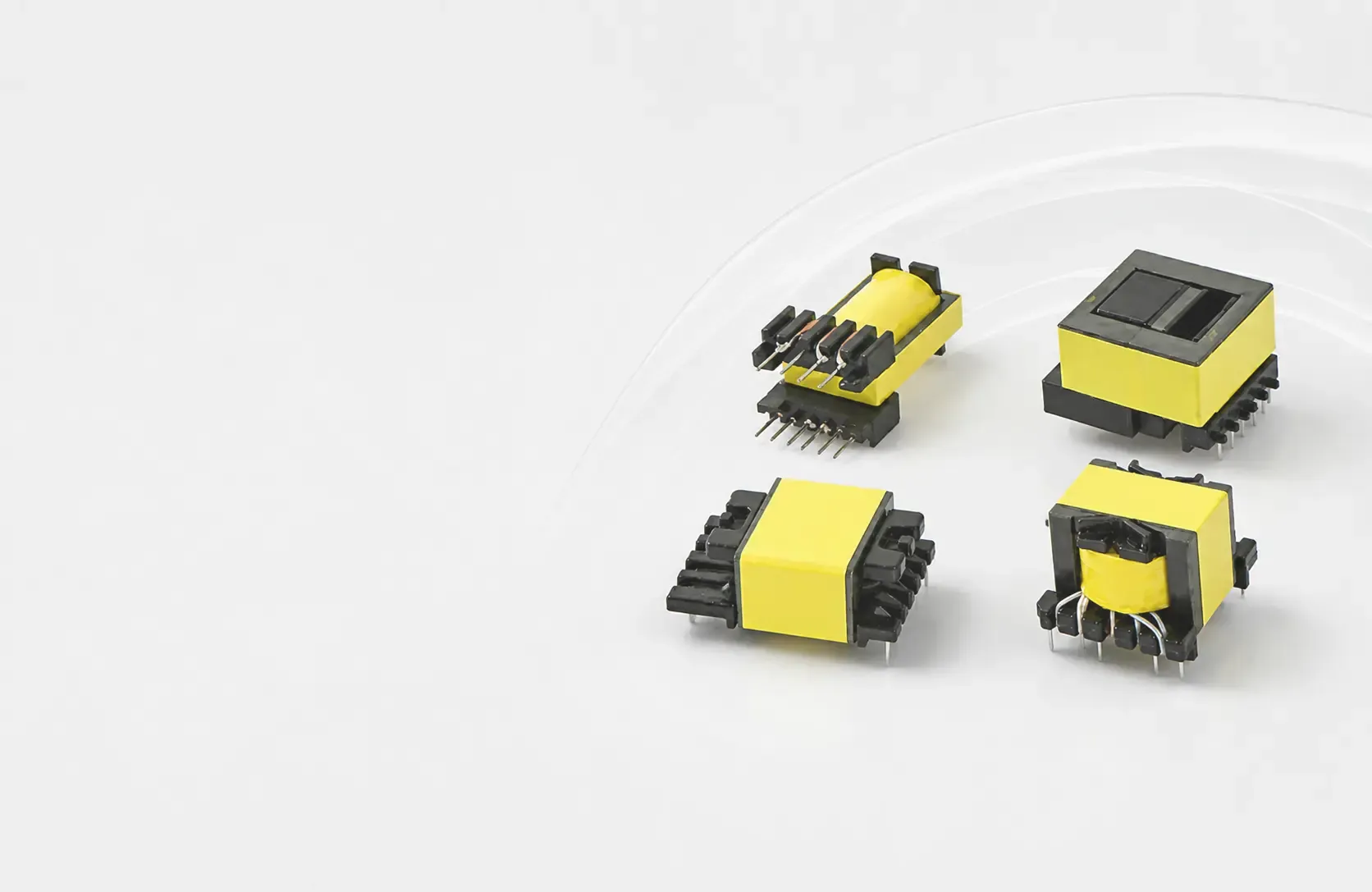
COMMONDE, a magnetic components manufacturer based in Ningbo, China, provides common mode chokes, inductors, high-frequency transformers, and ferrite cores. Its product portfolio includes multiple common mode choke constructions and supports discussions about standard components and OEM/ODM customization.
This guide explains how purchasing managers, engineers, and supplier quality teams can establish a practical second-source qualification process without introducing unnecessary production risks.
Why OEM Manufacturers Need a Second Common Mode Choke Supplier
A second-source strategy gives manufacturers an additional sourcing option for a component already included in their bill of materials (BOM).
For power electronics and industrial equipment, supply interruptions can occur because of material shortages, production schedule changes, discontinued components, or unexpected increases in demand.
If only one supplier has been approved, a shortage may force engineers to evaluate alternatives under time pressure.
A planned second-source qualification program helps address these risks before they become urgent.
Common OEM Purchasing Challenges
-
An approved component becomes difficult to obtain.
-
A manufacturer increases its minimum order quantity.
-
Lead times no longer match the production schedule.
-
The existing choke is being discontinued.
-
A new production location needs an alternative source.
-
Material or construction changes require renewed validation.
-
Procurement teams need more competitive, technically comparable quotations.
The objective is not necessarily to replace the existing supplier.
Instead, OEM companies can establish another approved source that meets defined requirements and can be considered when production conditions change.
Important: A second-source part must be qualified for the actual application. Matching a component's description or package size does not guarantee interchangeability.
Which Buyers Should Consider Second-Source Qualification?
The requirements vary depending on the equipment being manufactured and the approval process used by the customer.
| B2B customer | Typical application | Main sourcing priority |
|---|---|---|
| Industrial power supply OEM | AC/DC power supplies and power conversion boards | EMI performance, current rating, supply continuity |
| Solar inverter manufacturer | Inverter power electronics and auxiliary power circuits | Filtering performance, thermal behavior, mechanical compatibility |
| EV charging equipment manufacturer | Charging modules and control power supplies | Current handling, insulation requirements, production traceability |
| Industrial automation OEM | Control boards, drives, instrumentation | Component consistency, board compatibility, long-term sourcing |
| EMS / PCBA manufacturer | Contract manufacturing and PCB assembly | Approved BOM alternatives, packaging, assembly compatibility |
| Electronic component distributor | Industrial component procurement | Part identification, documentation, repeat-order availability |
Second sourcing is particularly useful for products with long manufacturing lifecycles or multiple production locations.
However, it may not be appropriate to introduce a new component during a critical production stage without sufficient time for engineering validation.
How to Identify an Equivalent Common Mode Choke
A common mode choke suppresses interference currents that travel in the same direction through coupled conductors.
Under normal differential-current conditions, magnetic flux largely cancels, allowing the intended current to pass without the same level of common-mode impedance.
The filtering response depends on the core, winding configuration, parasitic characteristics, and surrounding circuit.
This means two common mode chokes with similar nominal inductance can behave differently at higher frequencies.
1. Compare Impedance-Frequency Characteristics
A replacement should be evaluated within the frequency range where the original component performs its filtering function.
Do not rely exclusively on a single inductance value.
Request impedance-frequency curves and measurement conditions for both components whenever available.
TDK Product Center's technical FAQ, Please provide instructions on how to select common mode filters (common mode chokes), emphasizes checking impedance at the noise frequency and verifying the applicable rated current.
2. Verify Rated Current and DCR
DC resistance affects conductor losses and voltage drop.
For a winding carrying current, approximate resistive power loss is:
P = I²R
where I is the operating current and R is the winding resistance.
The buyer should compare DCR limits and rated current under relevant test conditions.
However, thermal performance also depends on ambient temperature, mounting, airflow, and surrounding components.
3. Check Mechanical Compatibility
A replacement may require the same:
-
PCB mounting footprint
-
Terminal arrangement and pin orientation
-
Overall dimensions and maximum height
-
Lead diameter or SMD terminal geometry
-
Assembly and soldering conditions
A component with different pin spacing or package geometry should not be treated as a direct drop-in alternative.
4. Confirm Insulation and Environmental Requirements
Depending on the application, buyers may need information about insulation materials, electrical spacing, dielectric withstand, temperature limits, and other relevant qualifications.
These conditions must be evaluated against the actual end-product requirements.
Common Mode Choke Second-Source Specification Checklist
The following table can be used when comparing an existing approved component with a proposed alternative.
| Specification | Existing approved component | New supplier verification |
|---|---|---|
| Part number and revision | Record the approved ordering code | Confirm proposed part identity and revision |
| Common-mode impedance | Approved frequency-response limits | Compare using compatible measurement conditions |
| Inductance | Nominal value, tolerance and test frequency | Verify values and measurement method |
| Rated current | Continuous current and rating conditions | Confirm current capability and derating |
| DC resistance | Maximum acceptable DCR per winding | Compare resistance and thermal implications |
| Leakage inductance | Approved requirement, if applicable | Check impact on differential-mode behavior |
| Operating temperature | Required range and environment | Confirm relevant limits and evidence |
| Insulation properties | Application-specific criteria | Verify applicable material and electrical data |
| Mechanical dimensions | Approved drawing and footprint | Compare dimensions, tolerances and pinout |
| PCB assembly | Approved soldering and packaging conditions | Verify assembly compatibility |
| Quality documentation | Existing inspection and approval records | Request equivalent part-specific evidence |
| Traceability | Required batch and change-control records | Confirm identification and documentation approach |
Procurement recommendation: Compare parts against one agreed specification instead of accepting different suppliers' catalog descriptions as equivalent evidence.
This table is an OEM evaluation checklist, not a published COMMONDE datasheet.
Compare Available Common Mode Choke Constructions
An alternative source may offer more than one magnetic construction.
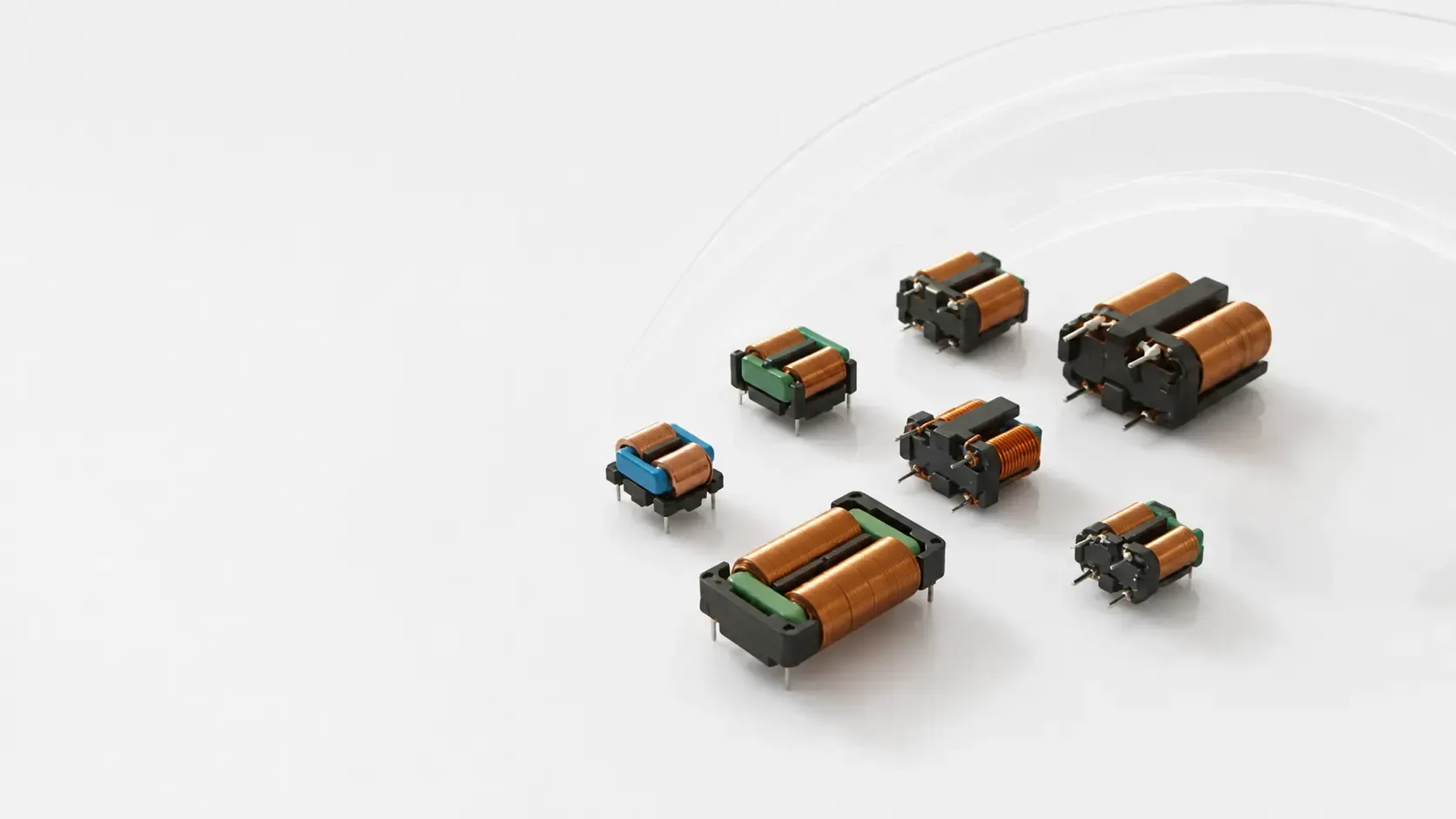
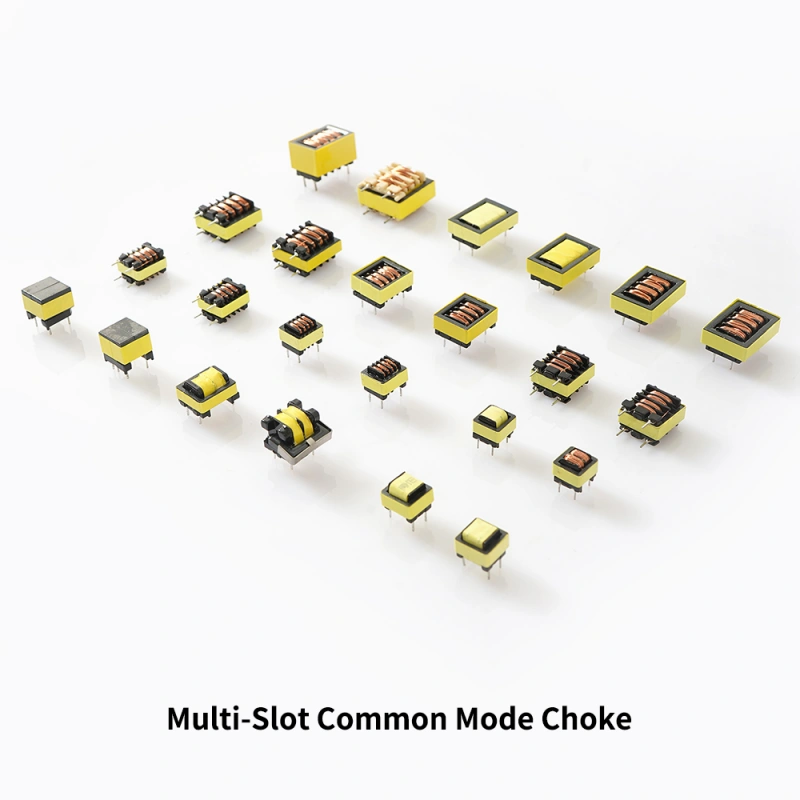
COMMONDE's Common Mode Chokes product range includes different structures that can provide starting points for a sourcing discussion.
Common Mode Choke Product and Construction Comparison
| COMMONDE product example | Construction or mounting approach | Potential sourcing use | Verification required |
|---|---|---|---|
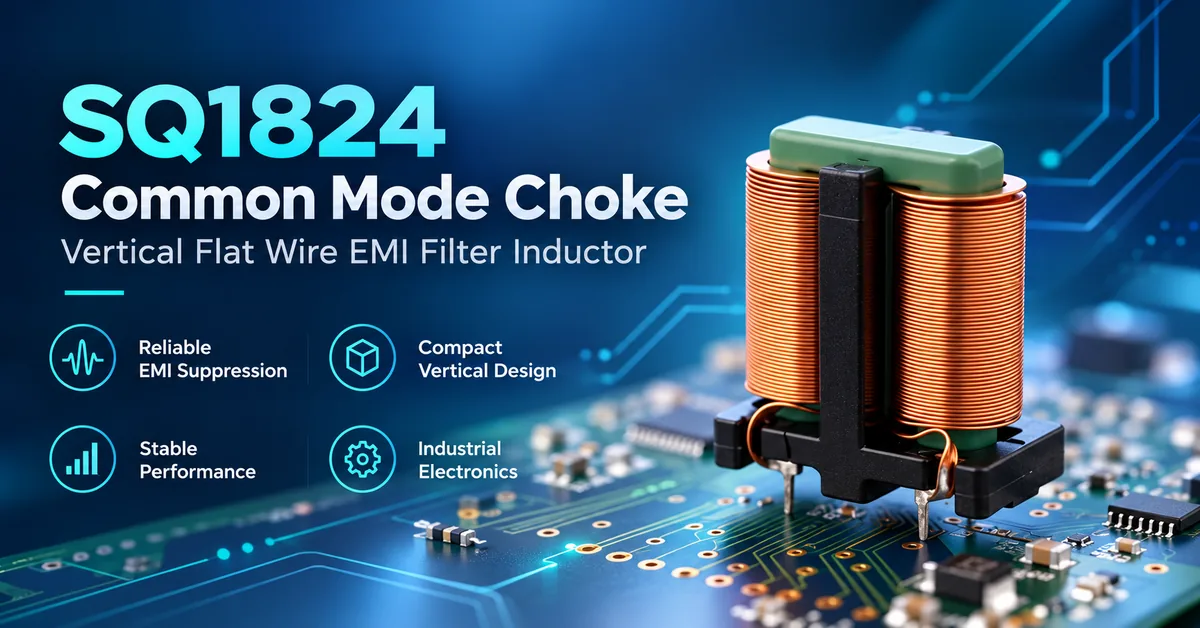
| SQ1824 Flat Wire Common Mode Choke | Vertical flat-wire, through-hole | Projects evaluating a vertical PCB-mounted structure | Actual dimensions, current, impedance and pinout |
| EE8.3 Common Mode Choke | Compact EE-type through-hole structure | Smaller PCB-mounted magnetic-component requirements | Actual electrical ratings and mechanical drawing |
| SQ Flat Wire Common Mode Choke Inductor | Flat-wire winding with through-hole terminals | Alternative flat-wire construction discussions | Exact series variant, thermal and electrical limits |
| Multi-Chamber Bobbins Common Mode Choke | Divided bobbin and through-hole mounting | Designs considering controlled winding separation | Insulation, terminal layout and component dimensions |
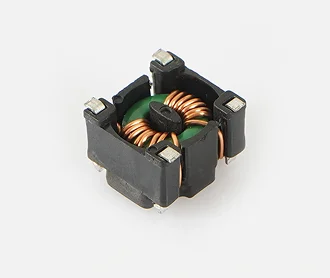
| SMD Common Mode Choke | Surface-mount construction | Compact SMT-based PCB assemblies | Impedance, signal or power-line suitability, reflow data |
The products above are structural references, not confirmed electrical equivalents.
For example, SQ1824 and EE8.3 are different product families. Their published names do not establish matching current ratings, impedance curves, dimensions, or drop-in compatibility.
Similarly, replacing a through-hole component with an SMD part typically involves PCB assembly changes and cannot be considered a direct mechanical substitution.
Three Second-Source Procurement Approaches
OEM purchasing teams can classify sourcing options according to the engineering changes required.
| Sourcing approach | Main advantage | Main limitation | Recommended validation |
|---|---|---|---|
| Existing standard part with matching requirements | Potentially fewer design changes | Similar specifications may hide performance differences | Datasheet review, sample comparison and system testing |
| Alternative construction meeting the same function | More design flexibility | Different geometry or assembly process | Electrical, mechanical and PCB-level validation |
| Custom component based on the approved requirements | Potential to address specific design constraints | Development cost, additional testing and lead time | Feasibility review, prototype approval and production qualification |
The first approach may be attractive when the objective is a rapid supply-chain alternative.
The second or third approach can be appropriate when the product is being redesigned or the existing component is no longer available.
The qualification route should match the amount of change introduced into the approved design.
How to Qualify a New Common Mode Choke Supplier
A structured approval process prevents purchasing teams from treating an unverified component as an approved production substitute.
Step 1: Collect the Existing Approved Specification
Record the current part number, drawing, electrical limits, material requirements, assembly conditions, and previous test results.
Identify which characteristics are mandatory and which can be reconsidered.
Step 2: Request a Technical Cross-Reference
Provide the existing specification to the prospective supplier and request a proposed part number or technical solution.
Any differences should be documented rather than assumed acceptable.
Step 3: Evaluate Samples Under Comparable Conditions
Perform applicable electrical and mechanical checks using defined measurement conditions.
Relevant checks may include:
-
Winding continuity and resistance
-
Common-mode inductance
-
Impedance-frequency characteristics
-
Mechanical dimensions and mounting
-
Insulation requirements where applicable
-
Thermal behavior under representative operating conditions
Step 4: Validate the Complete Equipment
A common mode choke works within a larger EMI filter network.
Final attenuation depends on source and load impedance, capacitors, cable routing, grounding, and other system characteristics.
Coilcraft's Common Mode Filter Design Guide illustrates the relationship between choke characteristics and circuit-level filtering behavior.
The alternative component should therefore be tested in the actual equipment configuration.
If applicable, repeat the relevant EMC and thermal tests before releasing the new part.
Step 5: Approve the Production Specification
Once the alternative passes evaluation, document the accepted part number, revision, testing conditions, inspection criteria, packaging requirements, and engineering change controls.
The second source should then be recorded in the approved BOM or supplier list according to the OEM's procedures.
Quality Control and Batch Traceability for Repeat Orders
A reliable common mode choke supplier should support consistent product identification and appropriate quality evidence across production lots.
COMMONDE describes a quality-control process covering incoming materials, in-process inspection, final inspection, outgoing inspection, and traceability on its company profile.
For OEM second sourcing, useful checks include:
Incoming materials: Confirming approved magnetic cores, conductors, bobbins and other relevant materials.
Production controls: Monitoring winding arrangement, terminal formation, dimensions and applicable process characteristics.
Final inspection: Checking agreed electrical and mechanical acceptance limits.
Outgoing inspection: Confirming product identification, order quantities, packaging and shipment information.
Traceability: Maintaining batch identification and appropriate records to support quality investigations.
These are manufacturing quality-control areas. Buyers should separately confirm which procedures, testing frequencies, and records apply to the quoted product.
What About ISO 9001, RoHS, and REACH?
Quality-system certification and product compliance documentation serve different purposes.
An ISO 9001 certificate relates to quality management. RoHS and REACH information concerns applicable material and regulatory requirements.
None of these documents automatically establishes complete electrical equivalence between two common mode chokes.
For regulated applications, request the relevant documents and verify their scope, validity and connection to the proposed part.
MOQ, Lead Time, and Bulk Ordering Considerations
When evaluating a common mode choke supplier for repeat orders, procurement teams should consider more than the initial quotation.
Important commercial questions include:
-
What is the minimum order quantity for the selected variant?
-
Are samples available before volume production?
-
Is the component a standard product or a custom design?
-
Which materials may influence manufacturing lead time?
-
What packaging and shipment quantities are available?
-
Can forecast demand be discussed in advance?
-
How are engineering changes communicated?
-
What happens if the approved material or construction becomes unavailable?
Actual MOQ, pricing, capacity, and lead time must be confirmed with the supplier for the specific project.
Compare Total Procurement Risk, Not Just Unit Price
A lower unit price may be outweighed by additional qualification, redesign, production interruption, or inspection costs.
For a fair commercial comparison, use the same requested specification, forecast quantity, delivery conditions, documentation requirements, and packaging assumptions.
This helps purchasing teams distinguish a genuine cost advantage from differences in quotation scope.
When OEM/ODM Customization Is the Better Solution
Sometimes an exact catalog replacement is unavailable.
In that case, OEM buyers may consider custom common mode choke development rather than attempting to force an unsuitable standard component into an existing application.
Potential customization discussions include:
-
Magnetic core geometry and material
-
Winding arrangement and conductor dimensions
-
Inductance and impedance targets
-
DC resistance and thermal requirements
-
Terminal layout and mounting method
-
Mechanical height and footprint
-
Insulation requirements
-
Packaging and inspection conditions
These variables can interact. Changes intended to improve one characteristic may affect other electrical or manufacturing properties.
COMMONDE discusses OEM/ODM magnetic-component development and standard product supply.
For a custom second-source project, request confirmation of feasibility, prototype requirements, any applicable tooling, and production conditions before committing to a design change.
Common Mode Choke Supplier RFQ Checklist
Before requesting a quotation, prepare a technical and commercial information package.
Electrical requirements
-
Current approved part number and manufacturer
-
Common-mode impedance or inductance requirements
-
Target interference frequency range
-
Rated voltage and operating current
-
Maximum DCR and relevant thermal limits
Mechanical and quality requirements
-
Component drawing and PCB footprint
-
Mounting style and terminal configuration
-
Operating environment
-
Required inspection and documentation
-
Applicable material or qualification requirements
Commercial requirements
-
Prototype quantity
-
Estimated annual purchasing volume
-
Desired delivery schedule
-
Preferred packaging
-
Need for a direct replacement or redesigned component
A complete RFQ allows the prospective supplier to evaluate the actual project instead of quoting an unrelated component that happens to share a similar name.
Contact COMMONDE to discuss a second-source project and provide your existing component information, target specifications, and expected quantities.
Frequently Asked Questions
1. What Is a Second-Source Common Mode Choke?
It is an alternative component sourced from another approved supplier or manufacturing source. It must meet the requirements established for the specific product before it can be used in production.
2. Can Two Common Mode Chokes With the Same Inductance Be Interchanged?
Not automatically. They may differ in impedance-frequency response, current rating, DCR, mechanical dimensions, thermal behavior, and insulation properties.
3. How Do OEM Buyers Compare Common Mode Choke Suppliers?
Compare technical specifications, available product constructions, testing documentation, manufacturing consistency, commercial conditions, and the ability to support repeat production orders.
4. Can an SMD Common Mode Choke Replace a Through-Hole Version?
Not as a direct mechanical replacement. Different mounting methods typically require changes to PCB layout and assembly. Electrical performance must also be independently verified.
5. Which Parameters Matter Most for an EMI Filter Replacement?
Common-mode impedance in the relevant frequency range, current rating, DCR, thermal characteristics, mechanical fit, and applicable insulation requirements are major considerations.
6. Are the COMMONDE SQ1824 and EE8.3 Models Interchangeable?
They are different product constructions. Interchangeability cannot be determined from their names or general descriptions and requires detailed specification comparison and application testing.
7. How Can a Buyer Verify Batch Consistency?
Request part-specific inspection criteria, applicable test records, batch identification, and engineering change-control information. Agree on the acceptance requirements before production approval.
8. Does a New Supplier's ISO 9001 Certificate Guarantee Product Equivalence?
No. Quality-system certification does not demonstrate that a particular replacement component has equivalent electrical, mechanical, or thermal performance.
9. What Determines MOQ and Lead Time for Bulk Common Mode Choke Orders?
Material availability, product construction, customization requirements, testing, order quantity, and manufacturing scheduling may affect MOQ and lead time. Confirm actual conditions through a project quotation.
10. What Should I Send COMMONDE for a Second-Source Evaluation?
Provide the current component specification, drawings, operating conditions, EMI targets, relevant qualification requirements, sample quantity, and forecast production volume.
Conclusion
Choosing a common mode choke supplier for OEM second sourcing requires a disciplined comparison of component performance, manufacturing consistency, documentation, and long-term procurement conditions.
A successful alternative-source strategy does not depend on finding a product that merely looks similar or shares the same nominal inductance. It depends on confirming that the proposed component meets the requirements of the approved design and performs acceptably in the finished equipment.
For industrial power supplies, inverters, charging equipment, and automation electronics, early qualification can help reduce the risks associated with urgent substitutions and production interruptions.
COMMONDE offers several common mode choke constructions and supports discussions about standard and customized magnetic components.
Explore the COMMONDE Common Mode Chokes product range, review the product catalog, or contact COMMONDE for a sourcing and technical evaluation.
Share your existing part number, electrical requirements, mechanical drawing, application conditions, and estimated order volume to discuss suitable alternatives, available documentation, and the next steps toward qualification.