Ferrite Beads Toroidal Rod Tube for Compact Cable and Component Support
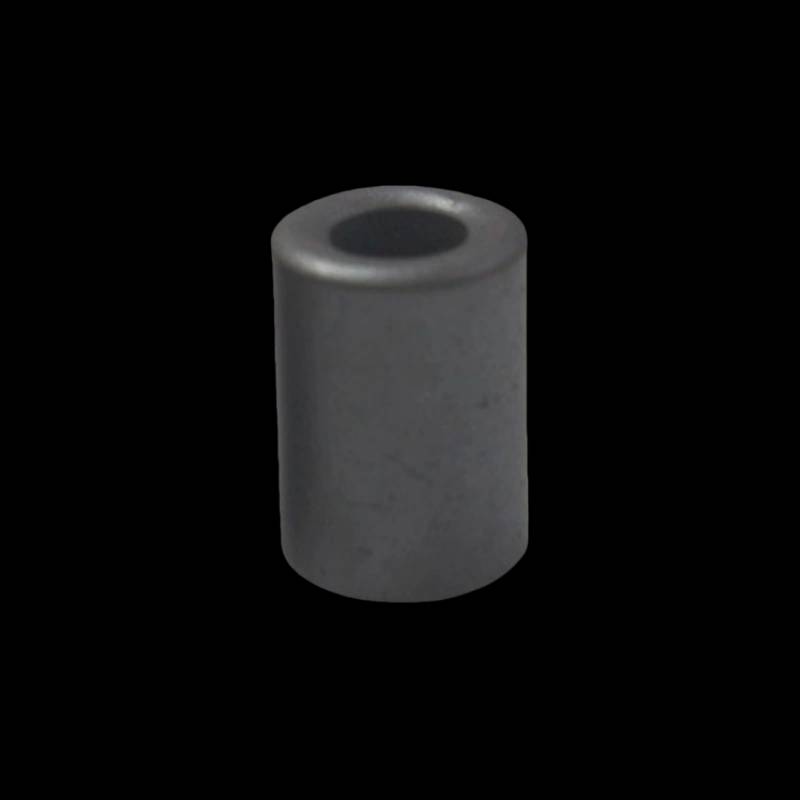
The Ferrite Beads Toroidal Rod Tube is used in assemblies where a small cylindrical part needs to fit securely, stay aligned, or help organize a cable, wire bundle, or mating part. For buyers, the main problem it solves is simple but important: how to keep a compact component centered and stable without adding unnecessary bulk or complex hardware. Based on the provided product image notes, the item appears to be a short cylindrical industrial part with a smooth outer surface and a centered bore, while another visible clamshell-style piece suggests a related clip-on accessory for enclosing or retaining a cable or tube. Exact function cannot be confirmed from the image alone, so this page focuses on the visible structure and common industrial uses of this type of component.
Product Overview
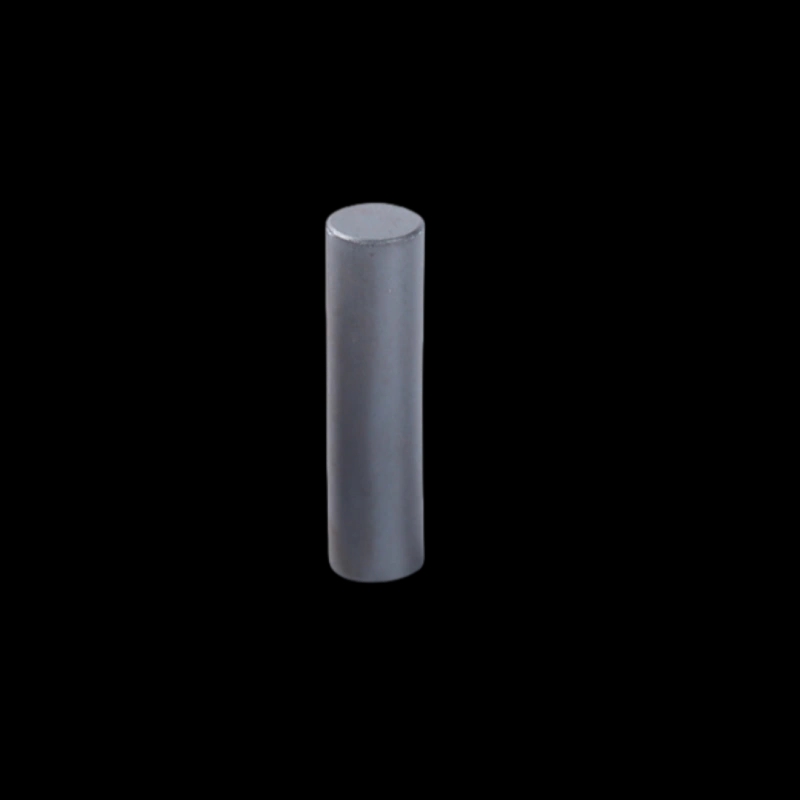
This product category sits between basic hardware and precision accessories. The visible shape is a short, uniform cylinder with flat or lightly rounded ends, which is a familiar form for spacers, sleeves, bushings, ferrule-like inserts, dowels, and alignment pieces. The additional clip-style shell shown in the image notes suggests a reusable open-and-close design that can wrap around a cable or small tubular item. That makes the overall presentation relevant to buyers who need compact retention, spacing, or protection in assemblies where space is limited.
Because the image data does not confirm exact material, electrical behavior, or dimensional compatibility, the safest reading is that this is a general-purpose cylindrical industrial component and a related clip-on shell accessory. It is suitable for product development teams, maintenance buyers, and fabrication shops that need a small part with a clean geometry and predictable seating in a housing or assembly.
Visible Structure and Key Features
Compact cylindrical body
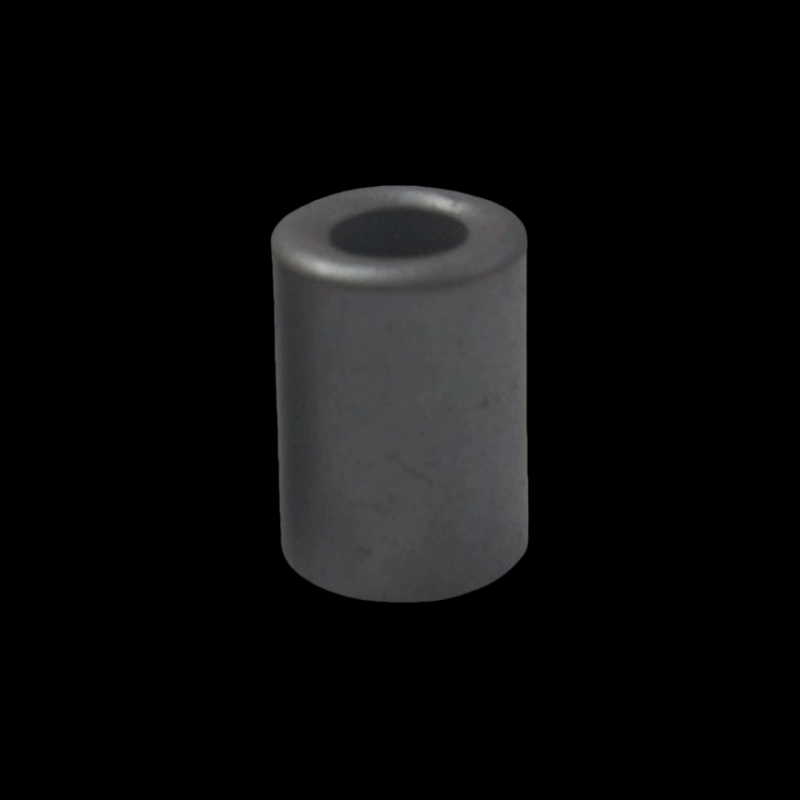
The most visible part is a short cylinder with a uniform diameter. That shape is useful in assemblies because it is easy to locate, easy to handle, and easy to fit into round bores or retention pockets. The smooth, matte-to-satin appearance also suggests a part that is intended to seat neatly without sharp external features.
Center opening or hollow section
One of the product descriptions indicates a centered through-hole. A central bore allows the part to guide or isolate a rod, bolt, shaft, wire, or tube depending on the final design. In practical use, a centered opening can help maintain alignment and reduce unwanted movement in a fixture or housing.
Clip-on clamshell accessory
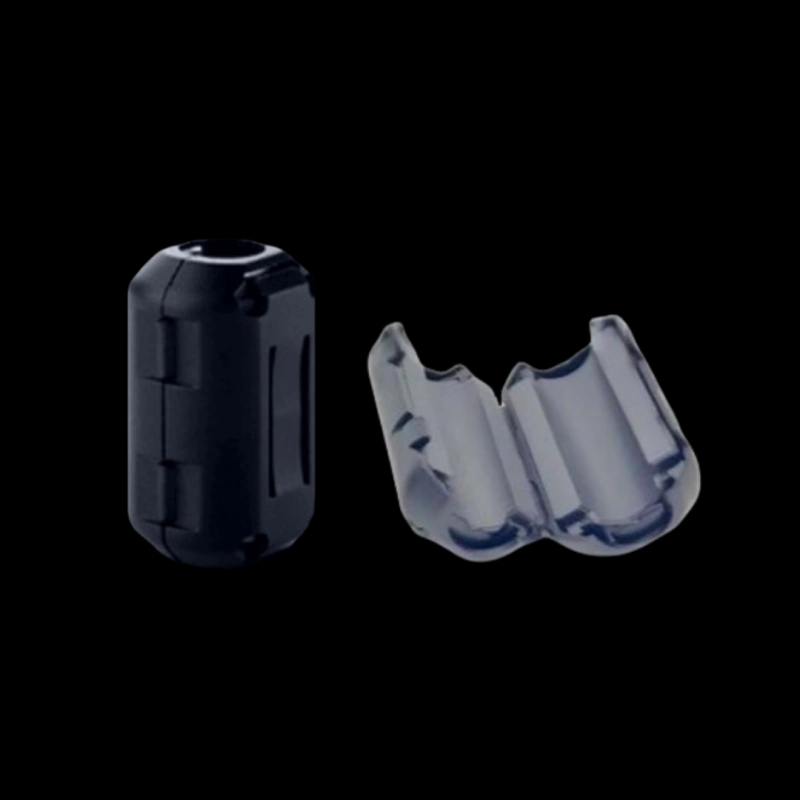
The separate open shell shown in the image notes appears to have a hinged or snap-fit closure with internal rounded channels. That kind of geometry is commonly used when a part must open around a cable bundle and then close securely without disassembly of the entire system. A reusable closure can be valuable in serviceable equipment and prototype builds where frequent access is needed.
Specifications and Capabilities Buyers Should Evaluate
Since the visible data does not provide exact measurements, buyers should confirm the following before selecting this type of component:
- Outer diameter and length
- Inside bore diameter or channel size
- Wall thickness
- End geometry, such as flat, chamfered, or rounded edges
- Fit style, including press fit, slip fit, or snap-fit
- Whether the part is solid, hollow, or split
- Mechanical or electrical role in the assembly
For industrial use, the key capability is not only shape but repeatability. A uniform cylinder with a smooth surface is easier to place into jigs, fixtures, and small assemblies than a part with irregular edges or visible deformities. If the clip-on accessory is part of the same product family, the internal grooved channels also matter because they define how well the part grips a cable or tube without excessive squeeze.
Materials and Finish Options
The image notes describe the component as appearing gray metal or possibly a coated metal, ceramic-like, or other engineered material. That uncertainty matters. Material choice can change strength, weight, friction, electrical behavior, thermal response, and long-term wear. For a buyer, the visible finish is only a starting point.
Common material families for this type of component may include metal, filled polymer, ceramic, or other molded engineering materials, depending on the application. The finish in the image looks smooth and uniform, with little surface texture. A clean finish is helpful for fit consistency and can reduce abrasion during insertion or repeated assembly.
If the clip-on shell is included as a related accessory, it is likely molded plastic based on the visible matte black appearance and snap-fit geometry. That would be consistent with injection molding, which is well suited to compact parts with internal channels, hinge features, and repeatable closure geometry.
Manufacturing Process
The visible cylindrical part looks most consistent with a turned or cut-from-stock component. In many factories, a part like this begins as round bar stock and is then cut, turned, ground, or otherwise finish-machined to produce a smooth, concentric body. If the piece is intended as a spacer, sleeve, or ferrule-style insert, machining is a logical route because it supports roundness and dimensional consistency.
The clip-style shell shown beside it appears to be a separate molded accessory. The likely process there is injection molding with snap-fit or hinge features formed directly in the tool. That manufacturing method is common for cable-retention and protective wraparound components because it allows complex internal shapes without excessive assembly labor.
For buyers sourcing parts in this family, the manufacturing process should be matched to the end use. Machined metal is often chosen for stability and wear resistance, while molded parts are often chosen for low weight, electrical isolation, or fast assembly.
Application Scenarios
This type of compact cylindrical component can be used across several industrial settings:
- Mechanical assemblies where a short spacer or locating feature is required
- Jigs and fixtures that need a precise cylindrical support or alignment point
- Equipment repair jobs involving replacement sleeves, inserts, or guide parts
- Prototype builds where a reusable and simple geometry is preferred
- Cable or wire management systems when paired with a clip-on shell accessory
- General fabrication work that calls for a clean round part with a central bore
In many cases, the value is not dramatic on its own but cumulative across the assembly. A small cylindrical support can reduce rattle, improve positioning, and help other parts engage more predictably.
Quality Control Considerations
Because exact tolerances and material grades are not provided, buyers should focus on practical inspection points. Visual quality control for this product class usually includes checking cylindrical straightness, bore centering, end-face squareness, and surface consistency. If the accessory is a snap-fit shell, the closing action should also be checked for smooth engagement and secure retention.
For production use, it is sensible to request dimensional verification on the outer diameter, bore diameter, and overall length. If the part is part of an electrical or insulating assembly, material confirmation becomes equally important. If it is a mechanical spacer, fit and concentricity are typically the main issues.
Customization Guidance
When sourcing a component like Ferrite Beads Toroidal Rod Tube, customization usually centers on geometry and fit rather than appearance alone. Buyers often specify bore size, length, outside diameter, edge treatment, and finish. If the clip-style shell is part of the same project, channel diameter, latch strength, and opening direction may also need adjustment.
Useful customization questions include:
- What part will pass through the bore or channel?
- Will the part be hand-installed, press-fitted, or clipped in place?
- Is the priority alignment, spacing, protection, or retention?
- Will the component see vibration, repeated opening, or thermal cycling?
- Does the application need metal strength, polymer flexibility, or another material behavior?
These questions help avoid over-specifying the wrong feature. A simple round part can perform very differently depending on the fit and material selection.
How Buyers Can Decide If This Part Fits Their Project
Start with the assembly function. If you need a stable round insert, spacer, or locating element, the cylindrical body is the relevant choice. If your priority is cable retention or repeated access, the clamshell-style accessory matters more. Then compare the visible geometry against the surrounding parts in your system: bore size, available clearance, insertion direction, and how much force can be applied during assembly.
Also consider serviceability. A reusable open-close design can simplify maintenance, while a rigid machined cylinder may be better for fixed structural support. If electrical isolation or EMI behavior is part of the requirement, that must be verified directly, since the image alone does not prove ferrite performance or insulation capability.
Requesting the Right Version
If you are sourcing this component for a project, the fastest path is to send a drawing, a sample, or a photo with target dimensions. That allows the supplier to confirm whether you need a machined spacer, a molded clip, a sleeve, or a custom cylindrical insert. The more clearly you define the mating part, the less likely you are to receive a component that looks right but fits poorly.
Contact and Next Step
If you need a compact cylindrical component, a ferrite-style accessory, or a snap-fit shell for cable or tube support, share your required diameter, length, and application details. A well-matched part will save time during assembly and reduce rework later. Send your specification or sample inquiry to confirm the best configuration for your use case.