Product Overview
The FeSi FeSiAl Toroidal Inductor is a compact magnetic component used to help manage unwanted noise, smooth current, and support energy handling in power circuits. In practical terms, it solves a common buyer problem: how to reduce ripple, suppress EMI, and keep electrical systems stable without taking up much board or enclosure space. The toroidal form is especially useful because it concentrates the magnetic path in a ring, which can improve magnetic efficiency and help reduce stray field compared with some open-core designs.
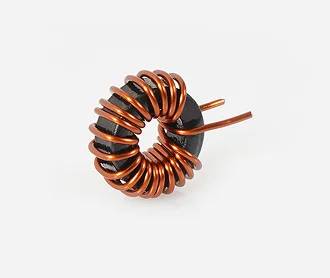
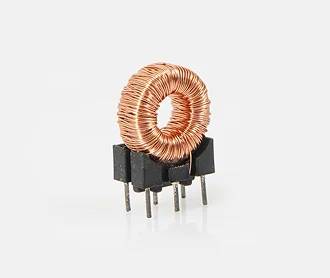
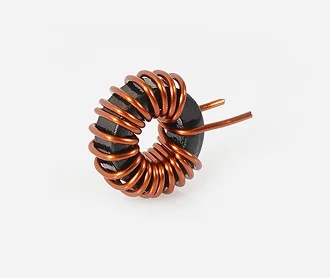
From the visible construction, this component appears to use insulated copper wire wound evenly around a dark ring-shaped core with two lead ends for electrical connection. The exact core composition, winding count, and electrical ratings are not visible, so those values should be confirmed during selection. Even so, the structure clearly fits the needs of power filtering, choke duties, and current smoothing in industrial and electronic assemblies.
What This Toroidal Inductor Is Used For
A toroidal inductor is a passive component that stores energy in a magnetic field when current passes through its winding. Because the winding is wrapped around a closed magnetic path, the device can be a practical choice for circuits that need stable current behavior and reduced electromagnetic interference. Buyers often choose this format when they need dependable filtering in a compact package.
Typical use cases include power supply input filtering, output smoothing in DC-DC converters, EMI/RFI suppression, and noise reduction in control electronics. In many systems, the inductor acts as a buffer between a noisy switching stage and a sensitive load. That can help protect downstream components, improve signal quality, and reduce the chance of system instability caused by electrical noise.
Visible Construction and Key Features
Ring-shaped magnetic core
The most obvious feature is the toroidal geometry. A ring core gives the winding a closed magnetic path, which is one reason this style is widely used in power electronics. The shape also helps keep magnetic leakage lower than in many non-toroidal layouts.
Insulated copper winding
The winding appears to be copper-colored insulated wire, tightly and evenly wrapped around the core. The close spacing suggests controlled manual or semi-automated winding, which is common in custom magnetic assemblies. Even winding distribution is important because it supports consistent magnetic behavior and mechanical stability.
Two lead exits
Two lead ends extend from one side of the component, making electrical connection straightforward. This is useful for mounting into assemblies where the inductor is soldered, crimped, or otherwise terminated into a circuit. The lead style may vary depending on final specification, but the visible form is suitable for direct integration into many power designs.
Specifications and Capabilities to Confirm
Because the image does not reveal electrical values, buyers should confirm the following before ordering or specifying the part in a design:
- Inductance value
- DC resistance
- Current rating
- Saturation characteristics
- Operating frequency range
- Temperature rating
- Lead length and termination style
- Core material type
The product name includes FeSi and FeSiAl, which may point to a powdered-metal or alloy-based magnetic material family, but the exact material cannot be verified from the image alone. If your application depends on precise permeability, loss behavior, or saturation performance, material confirmation is essential. These parameters can change how the inductor behaves in switching power supplies, EMI filters, and higher-current circuits.
Materials and Finish Options
For toroidal inductors in this category, the core is often selected from ferrite or powder-based magnetic materials depending on the target frequency and current profile. The visible core is dark, but the exact composition is not identifiable here. Wire is typically copper with enamel or another insulating coating so the turns do not short together. Lead exits may be tinned or otherwise prepared for soldering, although that is not confirmed by the image.
Finish options may include different wire insulation classes, lead preparation methods, and protective coatings or wraps, depending on the build specification. Some buyers also request heat-resistant sleeving, tape, or varnish impregnation for improved mechanical retention. If the component is intended for vibration-prone equipment such as automotive or industrial control systems, securing the winding can be an important part of the design.
Manufacturing Process
This type of component is typically produced through a toroidal winding process. The wire is wrapped around the ring core in a controlled sequence so the turns sit closely and evenly. After winding, the lead ends are formed for connection and the part may be inspected for uniformity, continuity, and dimensional consistency. Depending on the specification, the assembly can also receive additional processing such as lead trimming, insulation reinforcement, or coating.
In a custom magnetic component workflow, the winding count, wire gauge, and core selection are matched to the target inductance and current requirement. That is why seemingly similar toroidal inductors can perform very differently in real circuits. The build process matters as much as the shape.
Application Scenarios
Power supply filtering
In AC-DC and DC-DC power systems, a toroidal inductor can help reduce ripple and support cleaner output rails. This is valuable when sensitive electronics sit downstream from a switching stage.
EMI and noise suppression
Many buyers specify this type of component to reduce conducted noise on cables or PCB traces. It can be placed where noise enters or leaves a circuit, helping meet internal design goals for electromagnetic compatibility.
Industrial control equipment
Controllers, drives, and other industrial assemblies often need robust passive components that can handle repetitive electrical stress. A toroidal inductor is a familiar choice in these environments because it is compact and functionally straightforward.
Automotive electronics
Vehicle electronics face noisy power conditions and space constraints. A well-selected inductor can assist with smoothing and filtering in modules where electrical cleanliness matters.
Quality Control Considerations
For magnetic components, quality control should focus on both electrical behavior and mechanical consistency. Important checks may include continuity, inductance verification, DC resistance measurement, lead attachment integrity, and visual inspection of winding alignment. In higher-volume supply chains, buyers may also request incoming inspection criteria to ensure lot-to-lot consistency.
Since this part is not supplied with visible rating data, it is wise to validate the sample against your circuit conditions before releasing it into production. Pay close attention to heat rise, noise behavior, and performance under actual load. A toroidal inductor can look correct and still behave differently if the core or winding specification changes.
Customization Guidance
If you are sourcing a FeSi FeSiAl Toroidal Inductor for a specific application, the most useful customization inputs are the target inductance, current level, operating frequency, allowable size, and connection style. Those factors determine the core choice, wire gauge, and turn count. For EMI suppression, the design emphasis may differ from that of an energy-storage choke used in a power converter.
When requesting a custom build, share the circuit role first. Is the part for differential filtering, input smoothing, output choke duty, or noise suppression? That answer helps the supplier choose the right magnetic structure. If you already have a sample or a legacy part number, providing that reference can speed up the matching process.
How Buyers Should Evaluate This Part
Before selecting this inductor, compare the electrical requirements of your circuit with the available specification sheet. Confirm inductance, current handling, and resistance before you focus on price or package size. Also consider installation constraints such as lead orientation, mounting clearance, and thermal environment.
Another practical factor is whether your design needs low stray field performance. Toroidal shapes are often chosen specifically for that reason. If your application is sensitive to magnetic coupling into nearby traces or components, this geometry can be an advantage. If the operating environment includes vibration, ask about winding security and mechanical reinforcement as well.
Request a Quote or Technical Review
If you need a toroidal inductor for power filtering, EMI suppression, or current smoothing, send your target inductance, current requirement, operating frequency, and preferred size. If you already have a board layout or sample specification, that information can help verify whether this FeSi FeSiAl Toroidal Inductor is a suitable match. A clear requirement set leads to a better magnetic design and fewer revision cycles later.