What Is a FeSiAl Toroidal Inductor?
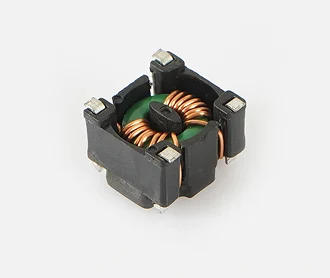
A FeSiAl toroidal inductor uses an iron-silicon-aluminum powder core with copper wire wound around a ring-shaped magnetic path.
FeSiAl is also commonly associated with sendust-type magnetic powder materials.
Its distributed air-gap characteristics make it useful when an inductor must carry DC bias and store energy while maintaining practical inductance.
Common Applications
FeSiAl toroidal inductors can be used in:
- Switching power supplies
- Output filters
- Differential-mode filters
- Power factor correction circuits
- Photovoltaic inverters
- Energy-storage converters
- Industrial power supplies
- UPS equipment
- Charging systems
- DC current-smoothing circuits
Why Use a Distributed Air-Gap Core?
In a powder core, the air gap is distributed throughout the magnetic material rather than concentrated in one physical gap.
This structure can provide:
- Useful DC-bias performance
- Gradual inductance reduction under current
- Energy-storage capability
- Reduced gap-related fringing
- Flexible inductance and current combinations
Actual performance depends on the material grade, permeability, core dimensions, winding, temperature, and operating frequency.
FeSiAl Compared with Ferrite
| Design Factor | FeSiAl Powder Core | Ferrite Core |
|---|---|---|
| Air gap | Distributed | Often discrete or ungapped |
| DC bias | Suitable for energy storage | Depends on grade and gap |
| Electrical resistivity | Lower than ferrite | High |
| Frequency performance | Grade and flux dependent | Often preferred at higher frequency |
| Saturation behavior | Generally gradual | Can be sharper |
| Selection basis | Bias, loss and temperature | Flux, gap, loss and frequency |
Parameters to Specify
Inductance Under DC Bias
A no-load inductance value is not sufficient for an energy-storage inductor.
Specify the required inductance at:
- Expected DC current
- Ripple current
- Operating frequency
- Operating temperature
RMS and Peak Current
RMS current affects copper heating, while peak current affects magnetic bias and saturation margin.
Both values should be provided with the waveform and duty cycle.
Core and Copper Loss
Core loss depends on the material grade, flux swing, waveform, frequency, and temperature.
Copper loss includes DCR as well as high-frequency skin and proximity effects.
Mechanical Requirements
Provide:
- Maximum outside diameter
- Maximum height
- Wire diameter
- Lead length
- Mounting orientation
- PCB hole spacing
- Insulation requirements
- Mechanical fixing method
Prototype Validation
Prototype testing should cover:
- Initial inductance
- Inductance under operating current
- DCR
- Current ripple
- Temperature rise
- Converter efficiency
- Mechanical dimensions
- Winding consistency
- Nearby magnetic-field interaction
Frequently Asked Questions
Is FeSiAl the same as ferrite?
No. FeSiAl is a metallic powder-core system, while ferrite is a ceramic magnetic material.
How should the current rating be determined?
Current capability should be based on inductance under bias and allowable temperature rise rather than a single generic current value.
Does a toroidal shape eliminate EMI?
No. Winding arrangement, current waveform, lead length, placement, grounding, and surrounding circuitry still affect emissions.