PQEC ER Core Overview
PQEC ER Core is a precision magnetic core component designed to guide and concentrate magnetic flux in compact electromagnetic assemblies. For buyers working on inductors, transformers, chokes, sensors, actuators, or magnetic fixtures, the main challenge is usually the same: how to create a stable magnetic path with a controlled gap and repeatable geometry. A core set like this helps solve that problem by providing a defined flux route and a compact structure that can support consistent assembly in engineering and prototyping work.
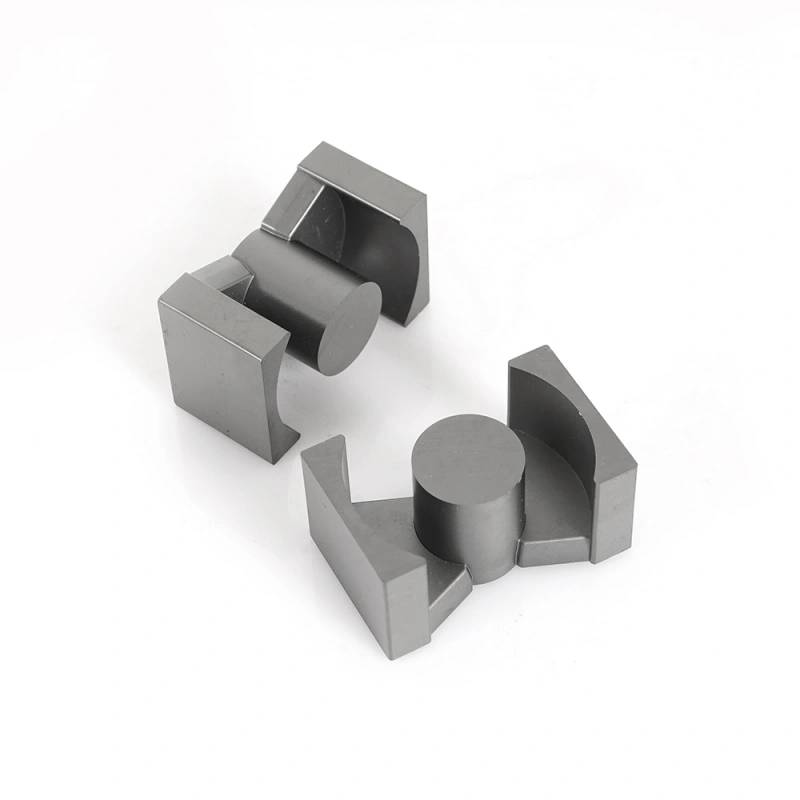
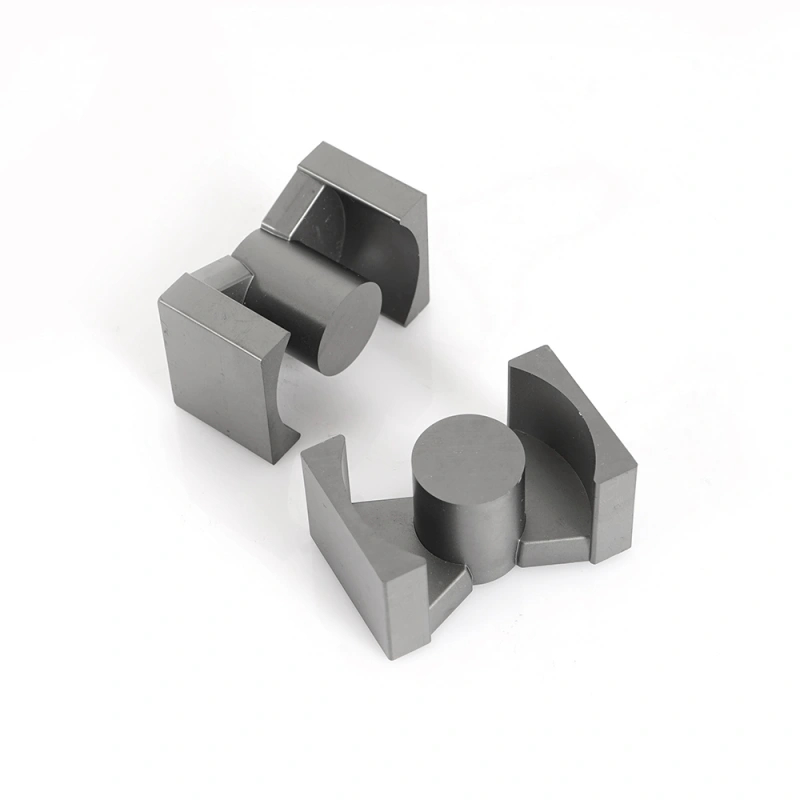
From the visible product form, the core appears to be made as a matched magnetic assembly with a cylindrical center section and opposing curved pole pieces. The geometry suggests a purpose-built magnetic circuit rather than a general-purpose metal part. That makes it useful wherever magnetic field concentration, repeatability, and mechanical fit matter more than simple bulk material strength.
Product Structure and Visible Characteristics
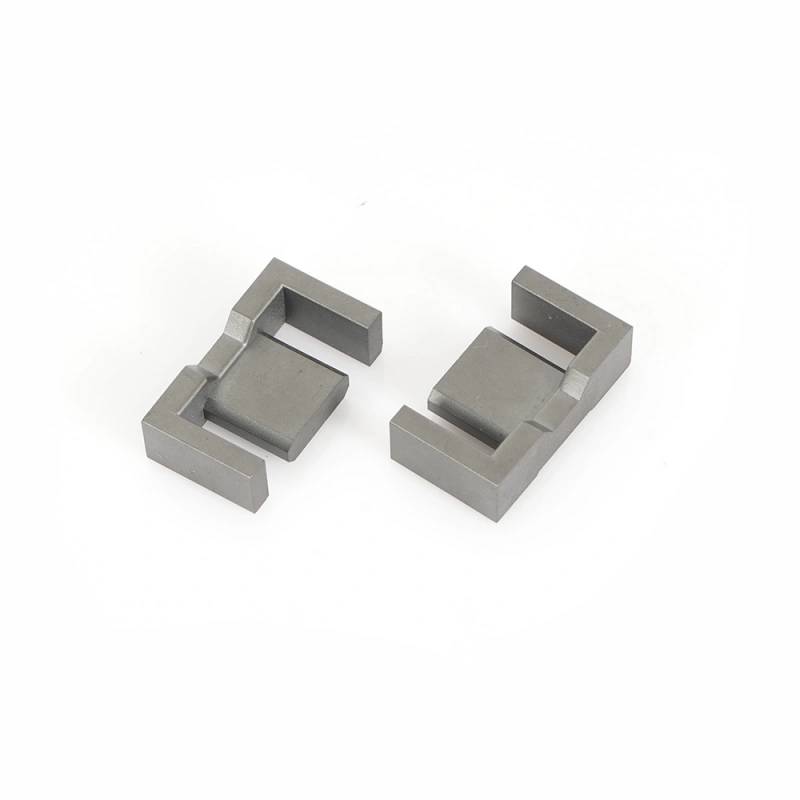
The visible examples show two assembled core sets with a dark gray, matte to semi-matte finish. The outer pieces have block-like bodies with curved internal cutouts, while the center member is cylindrical and sits within the magnetic path. The shape appears symmetrical, which is important in magnetic component design because symmetry helps maintain consistent field distribution and predictable mating behavior.
Several features can be observed directly: flat mating surfaces, clean edges, uniform geometry between the two examples, and a compact footprint. These visible details suggest a component intended for precision assembly. The exact material grade cannot be confirmed from the image alone, so it should be treated as an inferred magnetic core component rather than a specified ferrite or alloy grade.
What the geometry suggests
The curved pole faces and cylindrical center path indicate a design meant to define how flux travels through the part. In practical terms, that matters when a device needs a controlled magnetic circuit instead of a loosely coupled magnetic field. Engineers often look for this kind of structure when building test setups, laboratory prototypes, coil assemblies, or compact industrial devices.
Key Specifications and Capabilities
Because the exact grade and dimensions are not supplied, the most reliable way to evaluate this product is by its structural and functional characteristics. The PQEC ER Core shown here appears to offer:
1. A defined magnetic path for field concentration
2. Matched mating surfaces for repeatable assembly
3. Compact form factor suitable for space-limited designs
4. Symmetrical core halves that support alignment
5. A center post and opposing pole geometry that may help shape the effective gap
For buyers, the most important technical questions are still the same: What magnetic material is used? What are the dimensions? What surface finish is available? What tolerances can be held? Those answers determine whether the core is suitable for a lab prototype, an industrial coil system, or a higher-volume production build.
Materials and Finish Options
The visible product appears to be made from a dark gray magnetic material with a smooth, matte finish. Based on the image, the part could be a sintered ferrite, a machined magnetic alloy, or a powder-metal magnetic component that has been ground after forming. That is an inference, not a confirmed specification.
In magnetic core production, material and finish choices usually depend on application demands. Ferrite-type materials are often selected where electrical insulation and low eddy-current loss are helpful, while machined magnetic alloys may be chosen for different flux density or mechanical considerations. A ground or precision-finished mating surface is often valuable because it improves alignment and helps maintain a predictable air gap.
If you are comparing options, ask whether the supplier can provide raw, ground, or lightly finished surfaces, and whether edges can be controlled for assembly safety and fit. For custom builds, surface quality can matter as much as the magnetic formulation itself.
Manufacturing Process and Dimensional Control
Although the process is not confirmed, parts with this appearance are commonly produced through sintering, powder metallurgy, or precision machining from magnetic stock. After forming, some components are ground or lapped to improve flatness and mating accuracy. That final step is often important in magnetic assemblies because tiny geometric differences can alter the effective gap and the resulting performance of the device.
For buyers sourcing PQEC ER Core components, process consistency is often a decision factor. A supplier that can repeatedly produce matching halves, clean interfaces, and stable geometry will be better suited for development work and production scaling. In contrast, parts with visible mismatch or uneven surfaces can complicate assembly and introduce variation across units.
Typical Application Scenarios
The visible form makes this core suitable for a range of electromagnetic uses where a concentrated flux path is needed. Common application scenarios include:
• Inductors and chokes
• Transformers and coupling components
• Sensors and magnetic sensing fixtures
• Actuators and small electromagnetic mechanisms
• Laboratory magnetic circuits and test prototypes
• Industrial tooling or magnetic holding fixtures
In power electronics, core geometry influences efficiency, thermal behavior, and electromagnetic response. In sensing and lab use, the value often lies in repeatability and easy mounting. In actuator or fixture applications, a compact defined magnetic route can help create consistent force behavior in a controlled space.
Quality Control Considerations
Since the image alone does not reveal certified electrical or magnetic data, quality control should be evaluated through inspection and supplier documentation. Important checks usually include dimensional consistency, surface flatness, face matching, visual defect control, and part-to-part symmetry. If the core is intended for production use, buyers should also confirm whether the supplier can support batch traceability and incoming inspection requirements.
Useful QC questions include: Are the two halves matched as a set? Are the pole faces ground to a specified flatness? Is the center cylindrical section concentric with the mating features? Can the supplier provide drawings or inspection reports? These details matter because magnetic performance is strongly tied to geometry, not just the base material.
Customization Guidance
For engineering buyers, customization is often the deciding factor. A component like PQEC ER Core may need modification in size, pole geometry, center diameter, material choice, or surface finish to fit a specific magnetic design. Even small changes in gap size or face profile can influence field distribution and assembly fit.
If you are requesting a custom version, prepare the following information before contacting a supplier:
• Target application and operating environment
• Required dimensions and allowable fit range
• Preferred material family, if known
• Need for paired halves or separate components
• Surface finish or grinding requirements
• Quantity forecast for prototypes or production
Providing a drawing or reference sample is usually the fastest way to reduce ambiguity. When specifications are incomplete, a sample-first approach can help confirm whether the magnetic circuit geometry meets the design intent before moving to bulk production.
Buyer Decision Factors
Choosing a magnetic core component is not just about shape. Buyers typically weigh several practical factors at the same time. First is application fit: does the core geometry suit the magnetic path required by the device? Second is material suitability: ferrite, alloy, or other magnetic material families behave differently under electrical and thermal conditions. Third is dimensional repeatability: can the supplier make the same part reliably across multiple batches?
Other concerns include assembly method, cost of secondary grinding, and whether the core will be used in a prototype, pilot run, or higher-volume production environment. If the device relies on a controlled air gap or specific mating force, the flatness and symmetry of the core halves become especially important.
For some buyers, the deciding issue is compatibility with an existing housing or winding package. For others, it is simply the need for a compact magnetic assembly with clean, repeatable faces. PQEC ER Core is most compelling when those requirements overlap.
Practical Notes for Engineers and Procurement Teams
If you are sourcing this type of component, it helps to compare it against the exact end-use conditions rather than a generic catalog description. Frequency range, magnetic load, thermal environment, and mechanical mounting method can all influence the best material and geometry choice. Because the available product data here does not include exact magnetic values, you should avoid assuming compatibility based only on appearance.
For procurement, a good supplier should be able to discuss drawing control, sample support, packaging protection for brittle magnetic parts, and consistency across replenishment orders. For engineering, the key question is whether the core supports the flux path and gap strategy in your design without introducing unnecessary variability.
Request a Quote or Sample
If you need PQEC ER Core components for a prototype, custom electromagnetic assembly, or production evaluation, send your drawing, target dimensions, and application details for review. A clear specification is the fastest way to confirm material options, geometry compatibility, and manufacturability. If you only have a reference image, start with a sample request and define the critical fit features before scaling to volume.
Contact us with your technical requirements to discuss a suitable core configuration for your magnetic circuit, assembly line, or lab build.