Why Common Mode Choke Construction Matters
Different common mode choke constructions provide different balances of current capacity, resistance, high-frequency performance, size, assembly method, and cost.
The best option is not always the smallest component or the model with the highest inductance. It should meet the circuit’s electrical, thermal, mechanical, production, and insulation requirements.
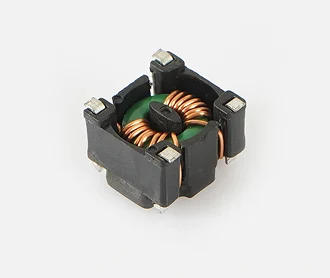
SMD Common Mode Chokes
An SMD common mode choke is designed for surface-mount assembly and compact PCB layouts.
It is commonly considered for:
- Compact chargers
- Communication equipment
- Control modules
- Consumer electronics
- Low-profile power supplies
- Automated high-volume production
SMD components can simplify pick-and-place assembly and tape-and-reel production. Their compact dimensions, however, limit the available core volume, copper cross-section, heat dissipation, and creepage distance.
Designers should carefully review current rating, DCR, temperature rise, pad design, and impedance over the required frequency range.
Toroidal Common Mode Chokes
A toroidal common mode choke uses two windings arranged around a ring-shaped magnetic core.
The closed magnetic path can provide effective magnetic coupling and useful common mode impedance. Through-hole toroidal constructions also offer flexibility in:
- Wire diameter
- Number of turns
- Core size
- Inductance
- Lead length
- Pin spacing
- Mounting orientation
Toroidal common mode chokes are frequently evaluated for power supplies, appliances, industrial equipment, converters, and AC input filters.
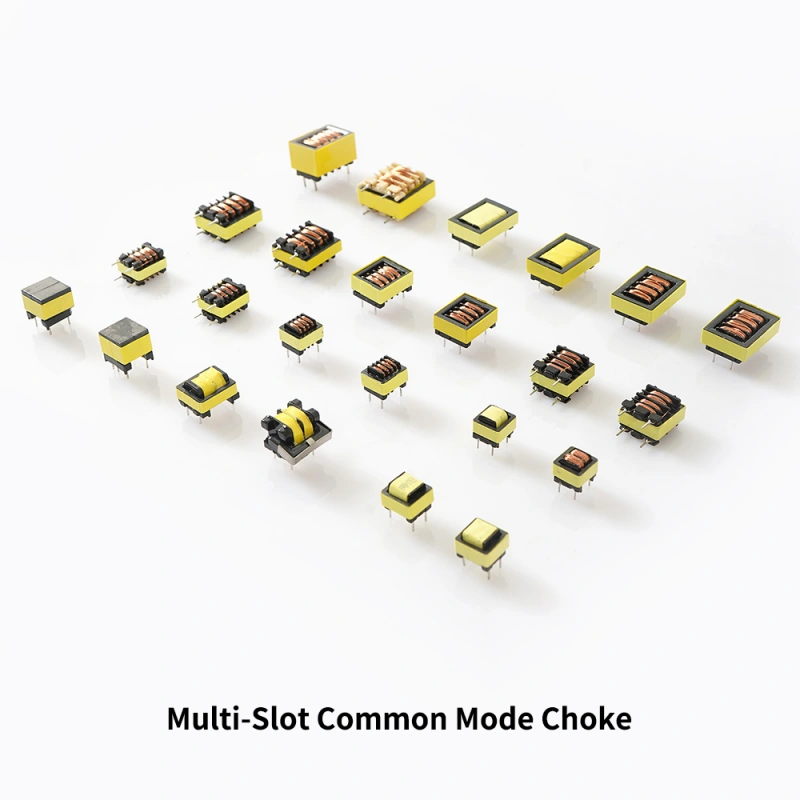
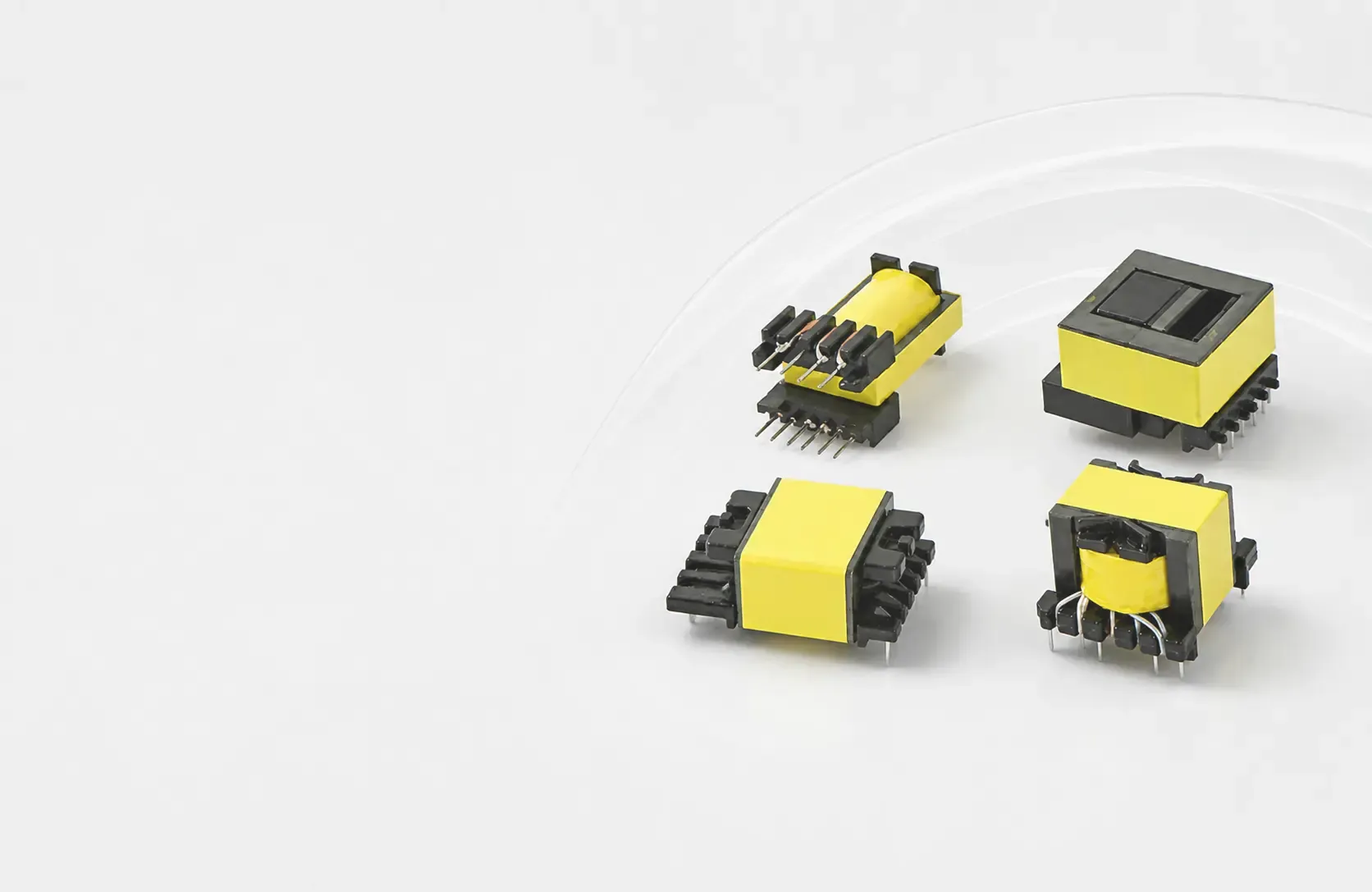
Square Common Mode Chokes
Square common mode chokes organize the core, winding, base, and terminals into a defined PCB-mount structure.
They are suitable when the buyer requires:
- Consistent component dimensions
- Defined pin spacing
- Stable PCB installation
- Multiple winding configurations
- Higher mechanical stability
- Customized electrical parameters
Square constructions are available in different sizes and terminal arrangements to suit various power-electronics applications.
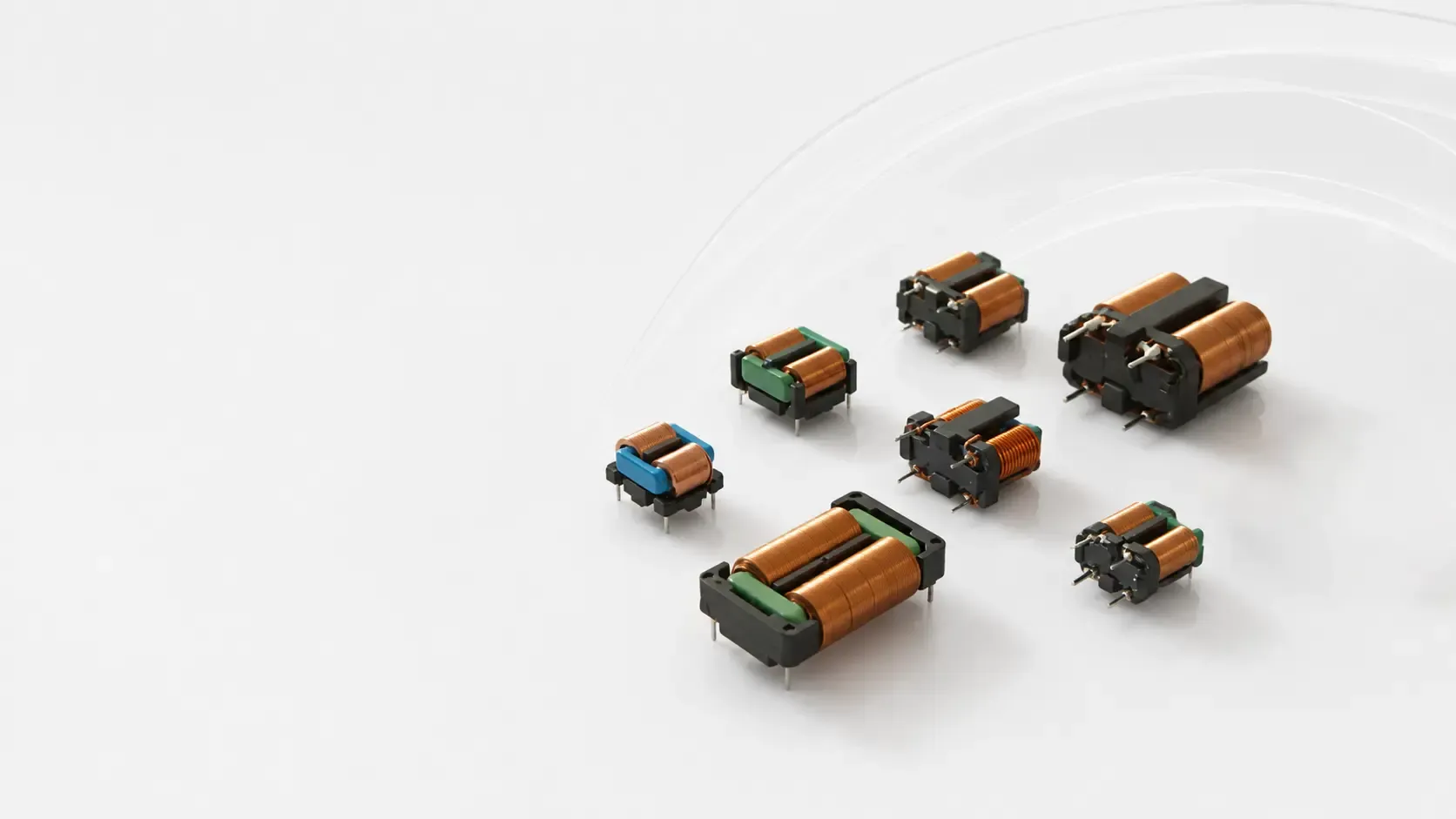
Flat Wire Common Mode Chokes
A flat wire common mode choke uses rectangular copper conductors rather than conventional round wire.
The larger conductor cross-section can help reduce winding resistance within the available space. This makes flat-wire constructions attractive for higher-current applications such as:
- Photovoltaic inverters
- Charging equipment
- Energy-storage converters
- Industrial power supplies
- High-power EMI filters
Flat wire also introduces forming, insulation, bend-radius, termination, and parasitic-capacitance considerations. High-frequency performance must therefore be tested in the intended circuit.
Construction Comparison
| Factor | SMD | Toroidal | Square or Flat Wire |
|---|---|---|---|
| Assembly | Automated SMT | Through-hole | Usually through-hole |
| Profile | Low | Depends on core size | Compact power structure |
| Current capability | Series dependent | Highly customizable | Suitable for higher current |
| DCR | Package constrained | Adjustable by wire size | Potentially lower |
| Customization | Moderate | High | High |
| Main advantage | Density and automation | Flexible winding design | Current and copper utilization |
How to Select the Right Construction
Choose an SMD common mode choke when compact size and automated assembly are priorities.
Choose a toroidal common mode choke when the project requires flexibility in turns, wire diameter, inductance, and core size.
Choose a square or flat-wire common mode choke when rated current, low DCR, mechanical stability, and a defined PCB footprint are the main requirements.
Frequently Asked Questions
Can an SMD choke replace a toroidal choke?
Only after electrical, thermal, mechanical, insulation, and EMI validation. Matching inductance alone is insufficient.
Does flat wire always provide lower loss?
Flat wire can reduce DC resistance, but actual loss also depends on frequency, skin effect, proximity effect, termination, temperature, and winding geometry.
Which construction provides the greatest customization?
Toroidal, square, and flat-wire through-hole structures generally provide the greatest flexibility in core size, winding, wire, and terminal design.