Ferrite Core High Frequency Transformer Overview
A Ferrite Core High Frequency Transformer is used when a buyer needs efficient power transfer at elevated switching frequencies, stable magnetic performance, and a compact footprint that fits modern power electronics. In practical terms, it helps solve the problem of stepping voltage up or down without the size and loss penalties associated with low-frequency magnetic components. For designers working on compact converters, isolated supplies, or control electronics, the transformer core choice can have a direct effect on heat, efficiency, and board space.
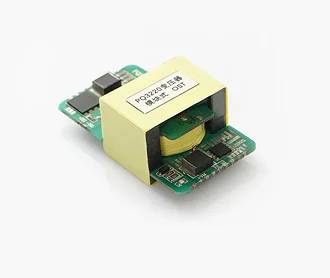
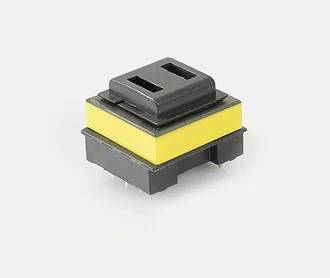
Although the supplied product image does not show a transformer and appears to depict a small molded electrical/mechanical component, the requested product page focuses on the ferrite transformer category. The notes provided also suggest a compact, protected component used in control panels or automation equipment, which aligns with the broader need for reliable electrical interfaces and compact assemblies. The discussion below stays within that product context and uses only general industry knowledge.
Product Overview
Ferrite core transformers are designed for high-frequency operation in power conversion circuits. Ferrite materials are chosen because they offer favorable magnetic properties at switching frequencies used in many modern electronic systems. Compared with laminated iron cores intended for 50/60 Hz applications, ferrite cores can support smaller magnetic parts and lower core losses in the frequency range commonly used by switch-mode power supplies and similar equipment.
These transformers are usually specified by electrical requirements rather than by appearance alone. Key considerations include operating frequency, input and output voltage, insulation needs, turns ratio, inductance targets, thermal limits, and the mechanical constraints of the enclosure or PCB layout. In many projects, the transformer is one of the parts that determines whether a supply can remain compact, efficient, and electrically isolated.
What Buyers Typically Need This Product to Do
Engineers and purchasing teams usually look for a ferrite transformer when the design must manage energy transfer at high frequency while keeping losses controlled. Typical buyer concerns include excess heat, poor coupling, large core size, audible noise, unstable output under load, and limited room for the magnetic assembly. A well-matched ferrite transformer helps reduce those risks.
For OEMs and equipment builders, the main value is often consistency. The transformer must behave predictably from batch to batch so that the final product can pass electrical tests, fit the assembly, and perform the same in field use.
Key Specifications and Capabilities
Electrical Parameters
Selection commonly starts with turns ratio, magnetizing inductance, leakage inductance, saturation behavior, and insulation requirements. Depending on the circuit, the transformer may be used for flyback, forward, push-pull, half-bridge, or other isolated topologies. The exact specification depends on the circuit architecture and operating conditions.
Frequency Range
Ferrite cores are typically associated with high-frequency switching designs rather than mains-frequency power. The usable range depends on the ferrite grade, core geometry, winding design, and thermal environment. Buyers should match the core material to the intended switching frequency rather than selecting by size alone.
Thermal and Mechanical Considerations
Heat dissipation, winding fill, bobbin choice, and mounting method all influence reliability. A compact transformer can be effective, but only if thermal rise and insulation margins are appropriate for the application. Mechanical stability also matters in vibration-prone equipment, where wire movement or loose bobbins can affect long-term performance.
Materials and Finish Options
The core material is usually ferrite, selected for magnetic performance at high frequency. Windings are typically copper wire or other conductive winding forms chosen according to current handling, resistive loss, and assembly method. Depending on design requirements, manufacturers may use insulation tape, varnish, encapsulation, or a protective bobbin structure to support dielectric strength and assembly durability.
Surface finish is generally driven by the housing or bobbin system rather than the ferrite itself. In some assemblies, the core may be wrapped, coated, or enclosed to improve protection and simplify handling. For custom builds, finish options can also support automated assembly, wire management, and clearance requirements inside compact enclosures.
Manufacturing Process
Ferrite core transformer production usually begins with core selection and winding design. After the magnetic materials and bobbin or former are chosen, the windings are formed to meet electrical targets such as inductance and turns ratio. The coils are then assembled with the ferrite core halves and secured by a suitable method, which may include adhesive, tape, clips, varnish, or potting depending on the design.
Once assembled, the transformer may undergo electrical verification to confirm winding continuity, polarity, insulation integrity, and key magnetic parameters. For higher-volume programs, process control is important because small variations in winding placement or gap control can change performance. Consistent assembly is especially important when the transformer is part of a regulated power stage.
Application Scenarios
Ferrite core high frequency transformers are widely used in switch-mode power supplies, industrial control systems, communication equipment, LED drivers, automation modules, battery charging circuits, and isolated low-voltage power sections. They can also be found in compact electronics where weight and size matter, but electrical isolation is still required.
In industrial environments, buyers often want a transformer that tolerates repetitive loading, temperature swings, and long service intervals. In consumer or office equipment, the priorities may shift toward compact size, low noise, and efficient use of board area. The same core technology can serve both markets, but the specification window changes with each use case.
Quality Control and Verification
Because transformer performance depends on multiple coupled variables, quality control should cover both mechanical and electrical checks. Common verification steps include visual inspection, dimensional inspection, winding continuity, hi-pot or insulation testing when applicable, inductance measurement, and functional checks in the target circuit environment. For production programs, documenting test criteria helps avoid confusion between prototype expectations and mass-production requirements.
Buyers should also ask how materials are controlled. Ferrite grade, wire specification, insulation system, and assembly method can all affect stability over time. If a design is safety-sensitive or exposed to elevated temperatures, the supplier should be able to explain how the construction supports the required electrical margin.
Customization Guidance
Customization is often necessary because high-frequency transformers are rarely one-size-fits-all. A buyer may need a different turns ratio, core size, pinout, winding arrangement, insulation structure, or mounting style. In many cases, the enclosure size and thermal budget set the physical limit before the electrical design is finalized.
When requesting a custom design, it helps to provide the input voltage range, output requirements, switching frequency, operating temperature range, isolation needs, mechanical envelope, and expected production volume. If the transformer will be installed in a dense assembly, include spacing constraints and any restrictions on height or footprint. Clear requirements reduce iteration time and make the first sample more useful.
Buyer Decision Factors
Purchasing decisions usually come down to fit, performance, reliability, and supply continuity. If the transformer is too large, the enclosure may need redesign. If the winding losses are too high, the power stage may run hot. If the insulation system is not appropriate, compliance and safety goals can become harder to meet. If the supplier cannot support stable repeat orders, the risk increases for ongoing production.
It is also worth considering manufacturability. A design that performs well in a lab may still be difficult to assemble consistently in volume. Good buyers ask how the part is built, how it is tested, and how closely the delivered part matches the electrical and mechanical needs of the final product.
Related Product Context
The supplied image data describes a small molded electrical/mechanical component with a compact square form, layered construction, and a two-slot top opening. That visible part does not provide enough information to identify a ferrite transformer, but it does reinforce a common procurement theme: many industrial products are compact functional components whose exact role is not obvious from appearance alone. For transformer sourcing, the same caution applies—technical data matters more than visual similarity.
Request a Custom Solution
If you are sourcing a Ferrite Core High Frequency Transformer for a new design or replacing an existing part, the best next step is to define the electrical target, mechanical envelope, and operating environment. Share your schematic needs, voltage levels, frequency, and packaging constraints so the transformer can be matched to the application rather than approximated.
Send your requirements to discuss a custom specification, prototype build, or production-ready version. A clear brief saves time and helps ensure the transformer supports the performance your equipment needs.